AI Guides for Kids: Tutorials, Reviews & Parent Resources
437+ parent-perspective articles covering tutorials, tool reviews, safety checklists, and school-collaboration tips. Filter by age and type to find what your child needs today.

When Parents Disagree About AI: Navigating Different Views on Kids and Technology
The New Parenting Battleground You Did Not See Coming

AI Voice Cloning and Children: Why Parents Should Care About Audio Deepfakes
Imagine receiving a phone call from your child. You hear their voice — panicked, scared, asking for help. Every instinct tells you to act immediately. But what if that voice is not actually your child
The KIDS Act and SAFEBOTs Act Explained: What New AI Laws Mean for Your Family
If you have a child who uses any AI-powered app, chatbot, or learning platform, two pieces of legislation passed in 2026 directly affect your family. The KIDS Act (Kids Internet Design and Safety Act)
AI and Online Predators: New Risks Parents Must Understand in 2026
Online predators have always adapted to new technology, and AI has given them a powerful new set of tools. In 2026, the threats facing children online look fundamentally different from just a few year

Your Child's First AI Song: A Step-by-Step Music Composition Tutorial
There is a magical moment when a child hears a song they helped create for the very first time. Their eyes widen. They grin. They immediately want to play it again. And then they want to make another

AI for Essay Revision, Not Essay Writing: Teaching Kids the Ethical Line
Your teenager sits down to write an English essay. The cursor blinks on an empty screen. They know ChatGPT could write the entire thing in thirty seconds. Their classmates might already be doing it. T
Your Tween's First AI Chatbot Conversation: A Parent's Step-by-Step Guide
The Moment Has Arrived: Your Kid Wants to Try ChatGPT
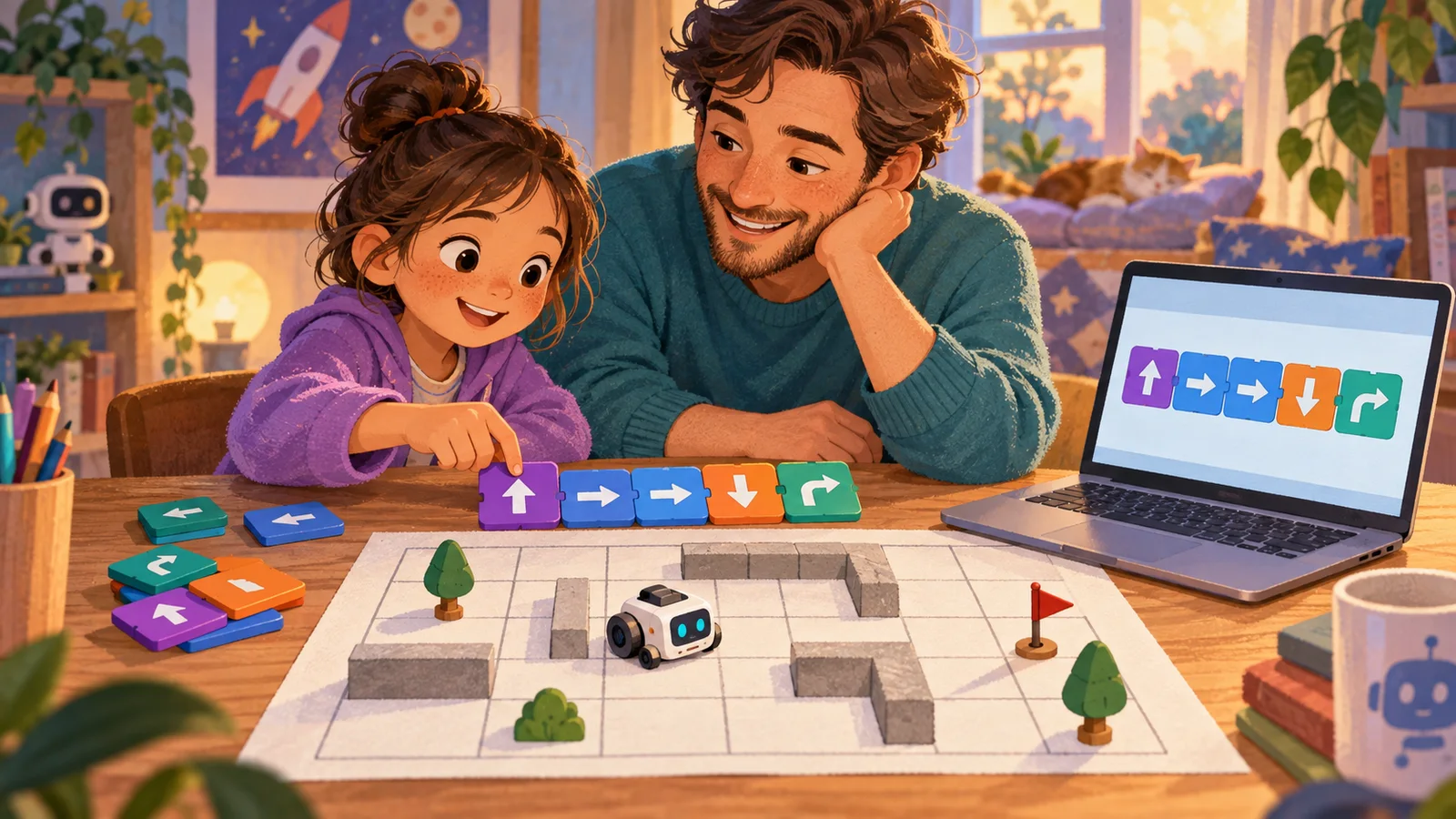
PictoBlox Review: Teaching Kids AI and Robotics Through Block Coding
What if your child could build an AI-powered robot that recognizes faces, responds to voice commands, and navigates around obstacles — all without writing a single line of traditional code? That is ex

AI Companion Chatbots for Kids: Safety Review of 6 Popular Options
Your child comes home from school, heads to their room, and starts chatting enthusiastically — not with a friend on the phone, but with an AI companion app on their tablet. This scenario is playing ou

Flint AI Review: Is This the Best AI Platform for K-12 Classrooms?
Finding the right AI tool for a classroom full of students is not just about flashy features — it is about safety, curriculum alignment, and giving teachers real control. Flint AI has been generating
50 AI Dinner Table Conversations: Spark Meaningful Family Discussions About AI
Why the Dinner Table Is the Best Classroom for AI Literacy

Learning AI Together: Why Parents Should Be Students Too
Here is a scene playing out in homes everywhere: a child asks their parent how an AI chatbot works, and the parent fumbles through a vague explanation about computers being really smart. The child sen
Frequently Asked Questions
What kinds of articles are in this library?
+
We organize by four types: Tutorials (step-by-step AI projects with your child), Guides (parent decision-making, e.g. "Is ChatGPT safe for an 8-year-old?"), Reviews (parent-perspective single-tool or comparison reviews), and News (AI education policy, new tool launches). Use the filter tabs above to narrow down.
Who writes these articles?
+
The KidsAiTools editorial team writes from a parent perspective — we use the AI tools we cover as parents, document what we observe, and publish our notes. We do not currently maintain a child-test panel or named expert reviewers; if we add either, we will disclose names, credentials, and review methodology on the methodology page.
How do I find articles for my child's age?
+
Use the age-group filter above (6-8, 9-12). Every article lists the age bands it applies to. If you have multiple children, start with our parent guides first, then read tutorials aimed at the youngest age in your household.
Where should I start if I'm new?
+
Three starter picks: "Kids AI Explained: What It Is" for the basics, "30 Safe ChatGPT Prompts for Kids by Age" for something you can use today, and "Khanmigo Review 2026" if you're evaluating paid tools. Any one of them gives you enough to start your first family AI session.
How often is the library updated?
+
We publish new parent guides regularly. Check the publication and update dates shown on each article, and review the tool’s current official policies before use.
Are tool reviews sponsored?
+
No. Reviews are based only on parent hands-on testing. We don't accept paid placements or free licenses from tool vendors. If a tool has a real problem, we write it plainly — no softened language.