Learning Guides
Comprehensive AI education guidance for parents and children, making learning safer and more effective
Education Guidance
Safety Protection
Practical Tips
Parent-Child Collaboration
Guides
240 articles
📚 Guides
Free or Paid: When Is It Actually Worth Paying for Your Child’s AI?
Three triggers that justify a paid AI subscription for a child, three that only feel like triggers, and the cheaper moves to try first.
6 min
6-8
9-11
12-15
📚 Guides
The School Sent an AI Device Home. What to Check the First Night.
A twenty-minute look at a school-issued laptop or tablet: what is on it, what your child can reach, and the three things worth an email tonight.
7 min
6-8
9-11
12-15

📚 Guides
Is Your Child Ready to Use AI Alone? Four Signs That Matter More Than Age
Age is the weakest predictor of whether a child can use AI on their own. Four observable signs, what each one means, and the move when it is missing.
8 min
6-8
9-11
12-15

📚 Guides
Your Child's AI "Friend": A Parent's Guide to Companion Apps
Companion AI remembers your child, misses them, and never disagrees. The four signs that tell an imaginary friend from a replacement, and what to say.
9 min
6-8
9-11
12-15
📚 Guides
From Prompts to Skills to Agents: What Your Child Should Learn Next
Three stages, not one skill. How to tell which one your child is actually in, one exercise for each, and the failure mode that comes from skipping the middle.
10 min
6-8
9-11
12-15

📚 Guides
When the School Says "We’re Using AI": How to Read the Answer
You asked the school about AI and got an answer that sounded fine. Most school AI answers are true and incomplete at once — here is how to tell which parts matter.
11 min
6-8
9-11
12-15

📚 Guides
Make a Picture Book With Your Kid in One Afternoon
A complete 90-minute workshop that ends with an 8-page picture book you can print. Your child writes it; the AI only draws.
14 min
6-8
9-11
📚 Guides
Write Your Family's Song
An hour-long workshop producing a real 2-3 minute song with words your child wrote. The AI composes and performs; the child writes and directs.
10 min
6-8
9-11
📚 Guides
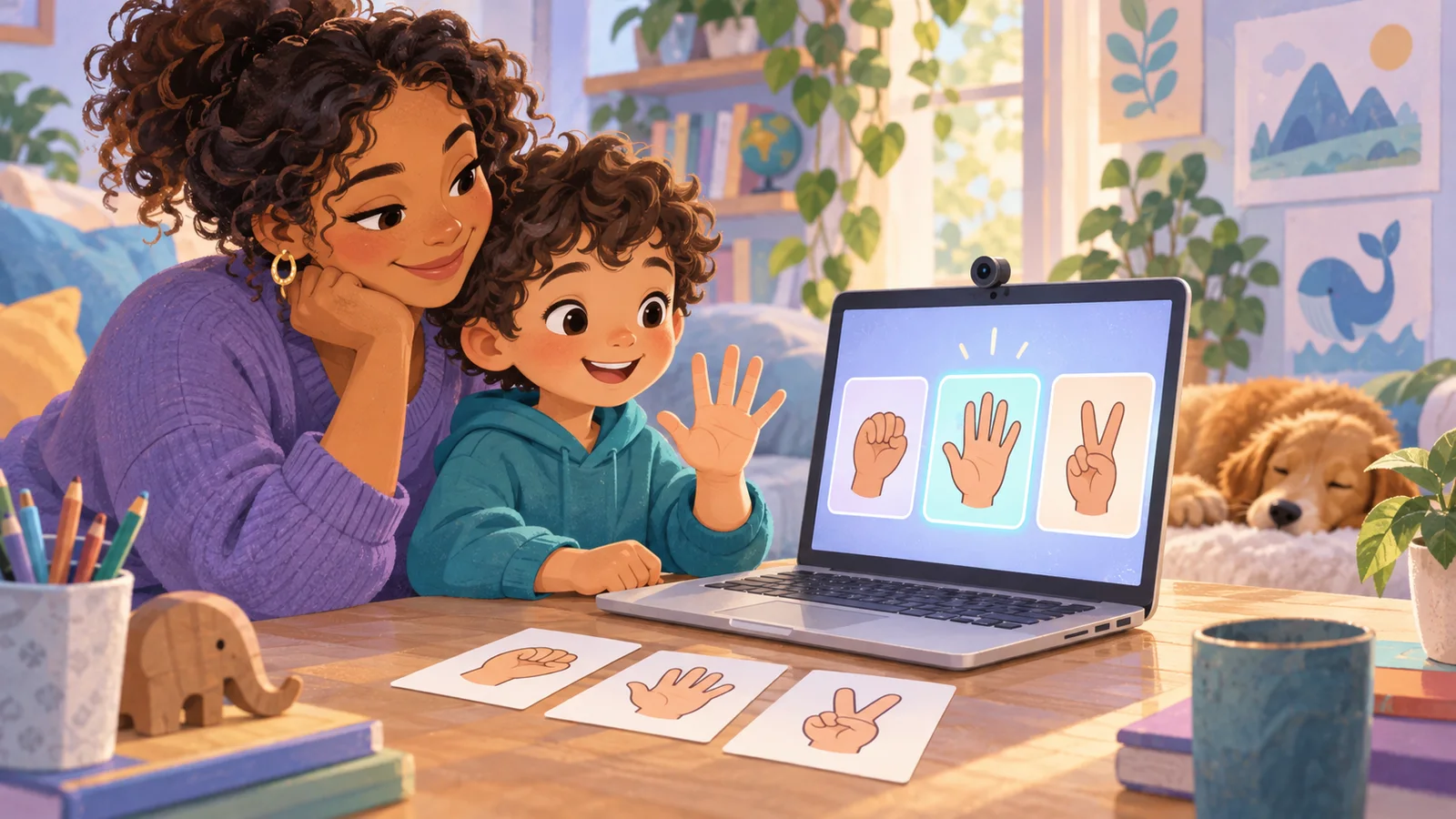
Train Your First AI Together: The Rock-Paper-Scissors Machine
Twenty minutes of training an AI teaches more than a year of using one. Build a gesture recogniser, then deliberately break it three times.
10 min
6-8
9-11
12-15

📚 Guides
Build a Text Adventure Game With Your Kid
Your child does not request a game — they design it. They write the rules and the world; the AI is the engine that runs them.
10 min
9-11
12-15
📚 Guides
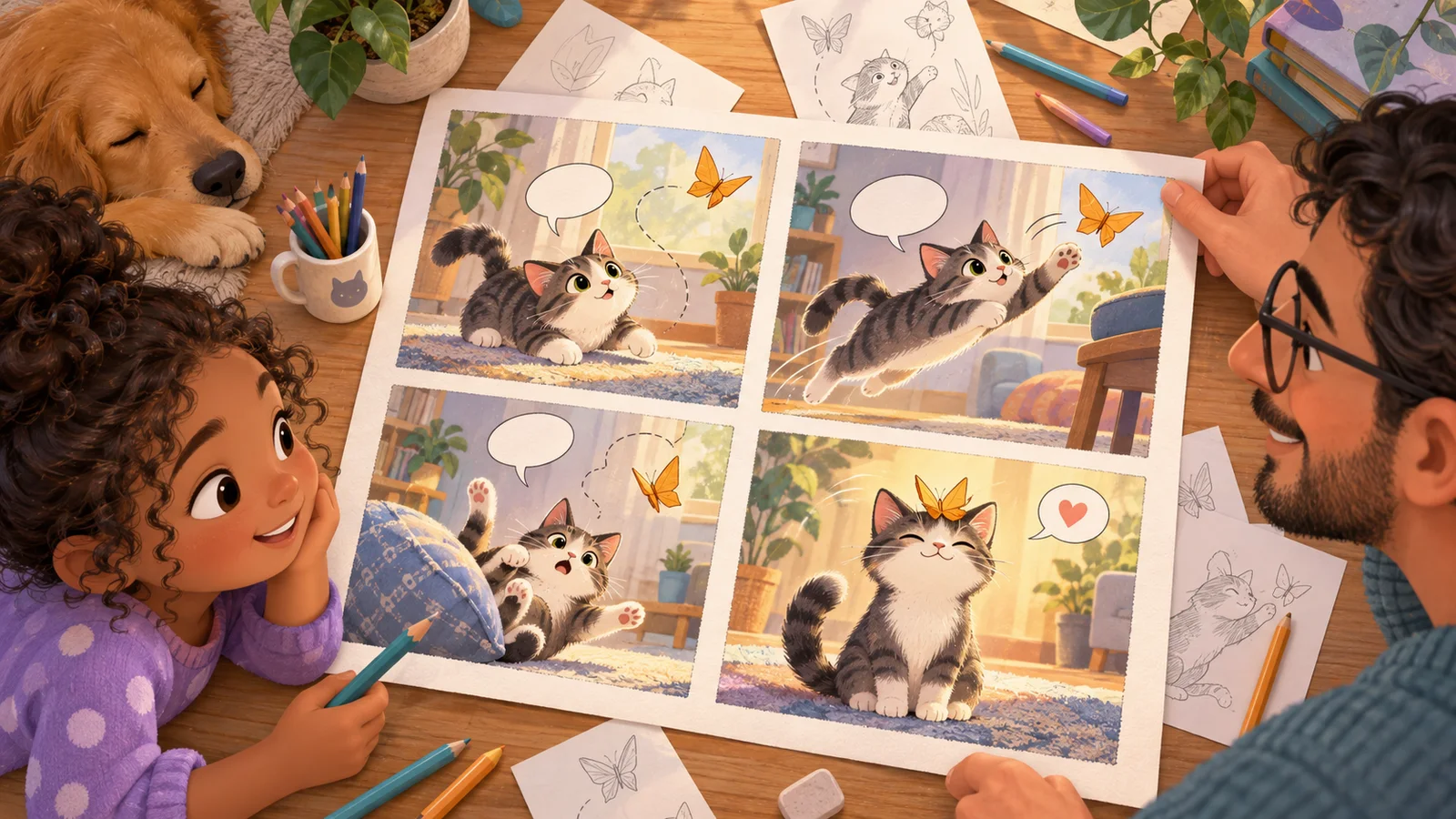
The Comic Strip Workshop: Four Panels, One Afternoon
The smallest complete story a person can make. Fifteen creative decisions, one printed comic with your child’s name on it.
9 min
6-8
9-11
📚 Guides
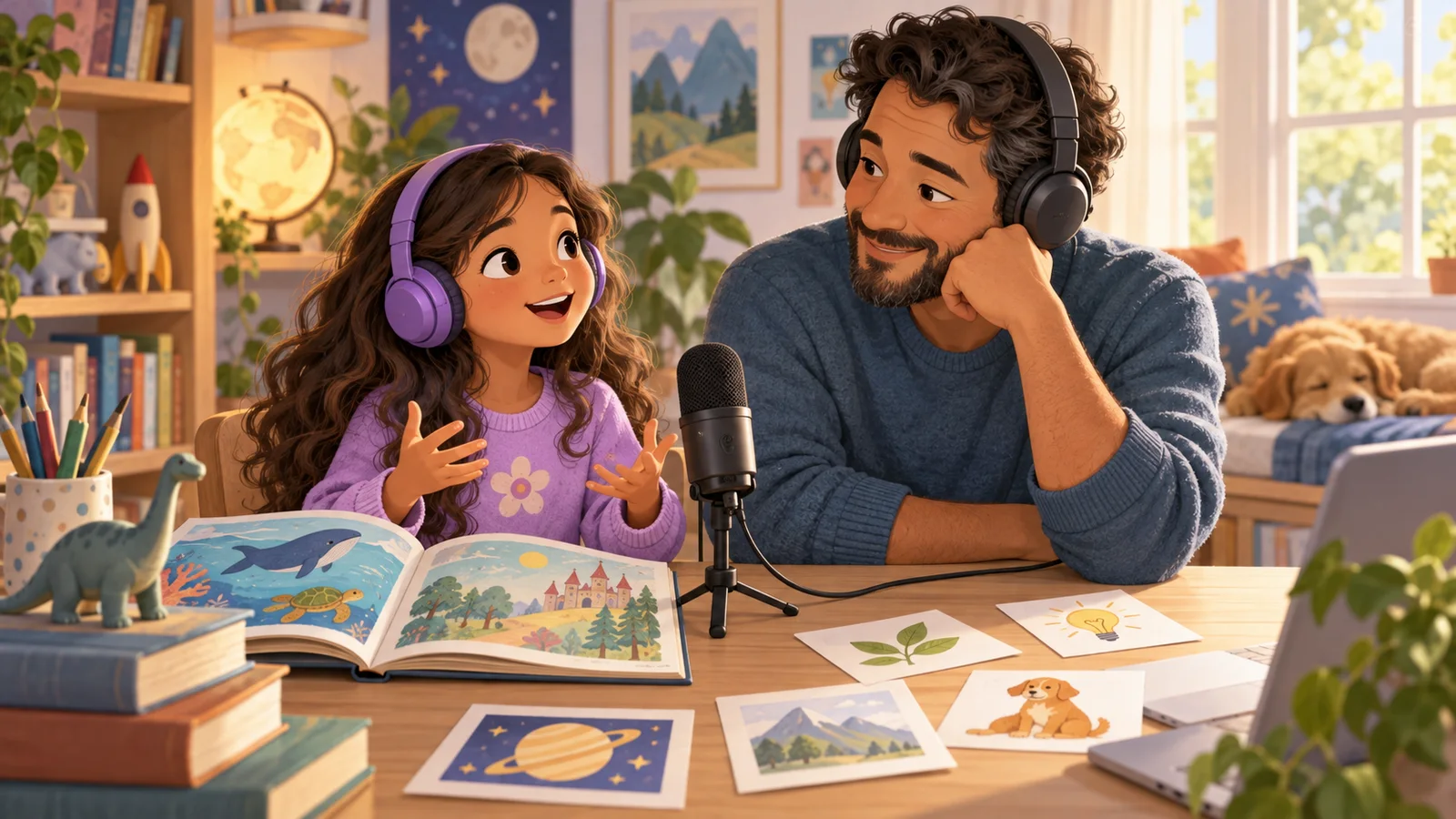
Your Kid's First Podcast Episode
A five-minute audio episode with your child as host. No equipment beyond a phone; the AI helps with exactly one thing — preparing good questions.
10 min
9-11
12-15