Learning Guides
Comprehensive AI education guidance for parents and children, making learning safer and more effective
Education Guidance
Safety Protection
Practical Tips
Parent-Child Collaboration
Guides
240 articles
📚 Guides
The Science Fair Sidekick: Using AI on Real Schoolwork Without Cheating
The distinction that makes AI workable on graded work, stage by stage — where it is the question-asker and where it must stay closed.
10 min
9-11
12-15

📚 Guides
The Family AI Setup: 30 Minutes to Make Your Account Kid-Ready
Most parents’ AI account is configured for one adult. This is a configuration problem, not a safety one — and it takes half an hour to fix.
12 min
6-8
9-11
12-15

📚 Guides
When the AI Says Something Wrong: The Incident Playbook
What you say in the next ten seconds decides whether they bring you the next one. Scenarios ranked by how often they actually happen.
11 min
6-8
9-11
12-15
📚 Guides
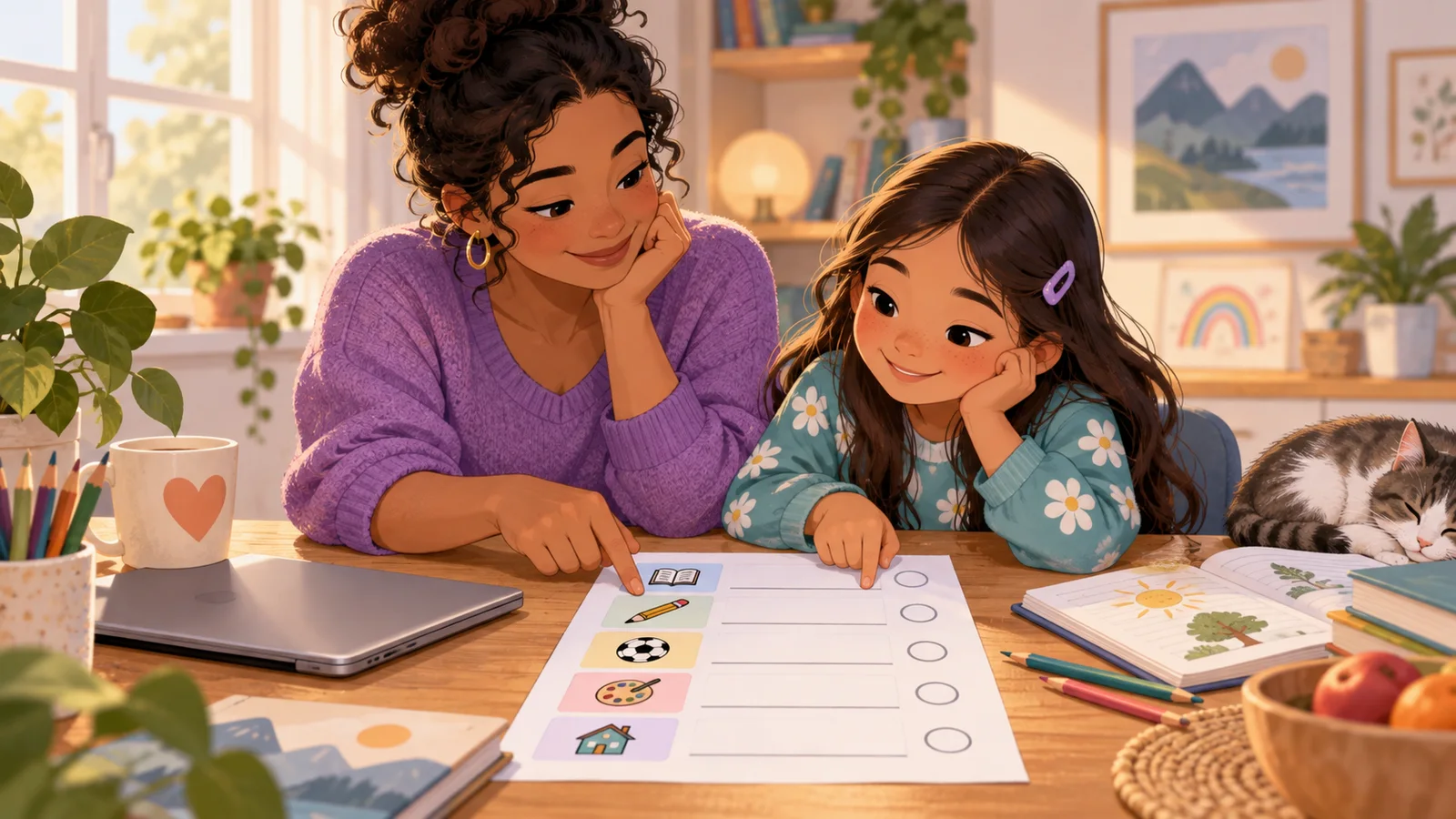
The Homework Contract: A One-Page AI Agreement Your Kid Will Actually Follow
Rules get announced and fail. Contracts get negotiated and hold. A 20-minute conversation and the one page it produces.
9 min
9-11
12-15
📚 Guides
Evaluate Any AI Tool in 10 Minutes
A new AI app for children launches roughly every week, so any recommendation list expires. This is the method instead of the list.
8 min
6-8
9-11
12-15
📚 Guides
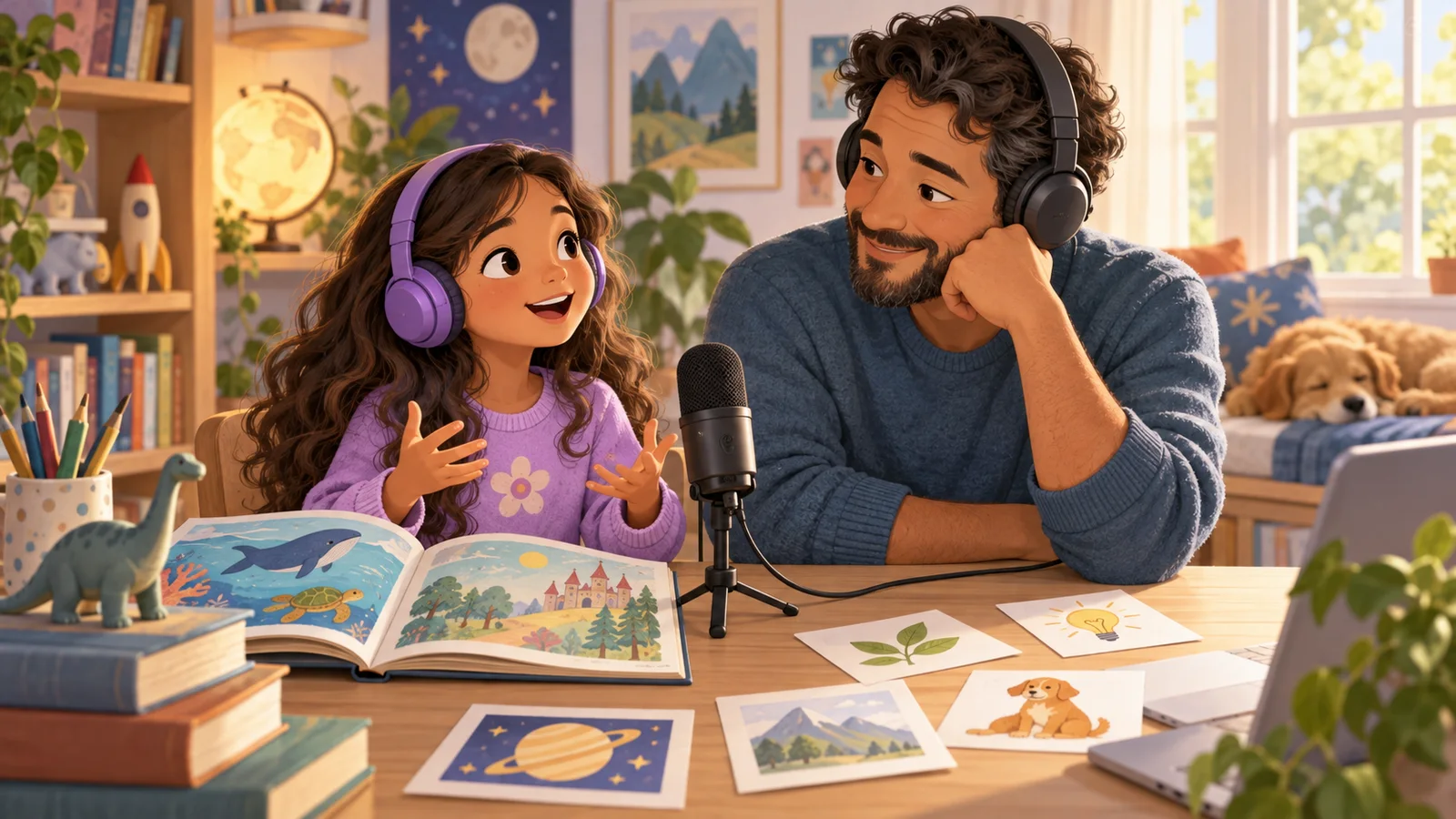
NotebookLM for Families: Turn Any Textbook Into a Podcast
A Google tool most parents have never opened, solving a problem every parent has: a child who must learn from a document they will not read.
8 min
9-11
12-15

📚 Guides
The Voice Mode Guide: AI for Kids Who Can't Type Yet
A six-year-old cannot hold a conversation at typing speed. Voice changes the age range — with a setup that makes it work.
9 min
6-8
📚 Guides
The 6-8 Roadmap: A Year of AI, Planned
Not a list of prohibitions. A year of what to actually do with a six-, seven-, or eight-year-old, in an order that builds on itself.
8 min
6-8
📚 Guides
The 9-12 Roadmap: The Years Before They Get Their Own Account
At thirteen most children can legally hold an AI account. Whatever habits they have by then are the ones they take into it.
9 min
9-11
12-15
📚 Guides
Five AI Tools Worth Your Child's Time — With the Play Plan for Each
Most "best AI tools for kids" lists are long, and that is the tell. Five tools that pass three tests, what each one teaches, and the play plan that makes it land.
12 min
6-8
9-11
12-15

📚 Guides
Your Child's First AI Session: A Minute-by-Minute Script
Most first sessions fail in the same forty seconds — because of what the adult said first. The actual words, minute by minute, for ages 5–7, 8–10 and 11–12.
11 min
6-8
9-11
12-15

📚 Guides
The Parent's Operating Manual for Raising a Kid With AI
Rules answer "how do I stop something bad?" The question that decides how your child turns out is different. Four moves, fifteen minutes a week, and the words to say when it goes sideways.
13 min
6-8
9-11
12-15