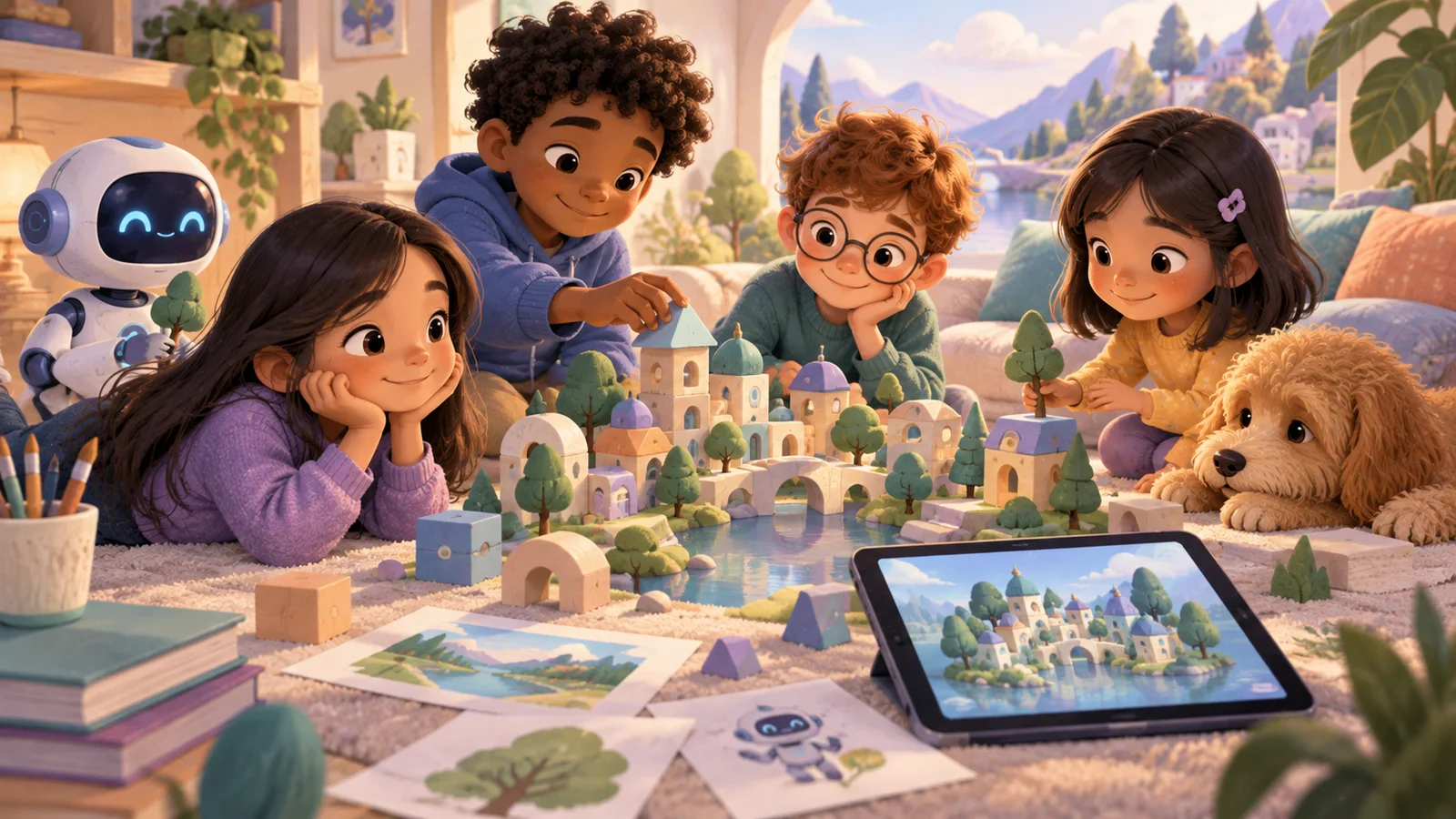
Building Games for Kids with ADHD: Sensory-Friendly, Zero Pressure, Real Focus
Version 2.10 — Updated October 2026
Here's something most game recommendation lists get wrong about ADHD: they assume the problem is attention. It's not. Kids with ADHD don't have a broken attention system — they have an attention syste
Here's something most game recommendation lists get wrong about ADHD: they assume the problem is attention. It's not. Kids with ADHD don't have a broken attention system — they have an attention system that's driven by interest, not importance. A child with ADHD can focus on something they find intrinsically engaging for hours (this is called hyperfocus). They struggle with things that are boring, abstract, or poorly structured.
This means the right building game for a child with ADHD isn't one that's "simple enough" — it's one that's engaging enough to trigger focus, structured enough to sustain it, and calm enough not to overwhelm their sensory processing. Most popular building games fail on the third point. Minecraft's sudden zombie groans. Roblox's chaotic multiplayer. Block Craft 3D's constant ad interruptions. Each one introduces a sensory jolt that breaks the focus state an ADHD child worked hard to enter.
This guide compares five building games by features to discuss with your child and their support team.
What Makes a Game ADHD-Friendly
Before the list, the five design features that matter most for ADHD kids:
1. Immediate reward loops (under 5 minutes). ADHD brains need dopamine feedback faster than neurotypical brains. Games with a "complete something → celebrate → next thing" cycle every 2-5 minutes sustain engagement far better than open-ended sandboxes where rewards come after 30+ minutes.
2. Visual structure, not text instructions. Reading instructions requires working memory, which is often a weak area for ADHD kids. Games with visual targets (ghost outlines, color guides) let the child SEE what to build instead of reading ABOUT what to build.
3. No sudden sensory surprises. No monster spawns, no loud sound effects, no screen shakes, no unexpected pop-ups. Predictable sensory environments let ADHD kids stay in flow.
4. Forgiving precision. Motor control can lag behind cognitive ability in ADHD kids. Auto-snap placement, undo buttons, and generous click targets prevent motor frustration from interrupting cognitive flow.
5. No social comparison. Leaderboards, visible other-player builds, and chat create anxiety-driven performance pressure that's the opposite of what an ADHD child needs. Closed, solo sandboxes are better.
The 5 Best Building Games for ADHD Kids
| Game | Reward loop | Visual structure | Sensory calm | Forgiving | Solo |
|---|---|---|---|---|---|
| Blocky's 3D Block Adventure | 2-4 min levels | Ghost outline targets | ✅ | Auto-snap | ✅ |
| Toca Builders | Immediate | Character-driven | ✅ | Large targets | ✅ |
| Townscaper | Instant | Algorithmic beauty | ✅ | Click = build | ✅ |
| LEGO Bricktales | 10-15 min | Physics puzzles | ✅ | Unlimited retry | ✅ |
| Viridi | Days/weeks | Growing plants | ✅ | Nothing to fail | ✅ |
1. Blocky's 3D Block Adventure — Best Overall for ADHD
This is my top recommendation for ADHD kids because it hits all five design criteria simultaneously. The 15-level structure means every 2-4 minutes the child gets a clear completion: celebration animation, star, share poster. This rapid reward cycle is ideal for ADHD dopamine patterns.
The ghost-outline system is especially valuable for ADHD kids — it eliminates the executive function burden of "what should I build?" which is the #1 point where ADHD children disengage from sandbox games. They can see the target, focus on placing blocks, and experience success without needing to plan.
Auto-snap placement means a slightly-off tap still works — so the child isn't fighting their motor control while trying to maintain creative focus. This is a subtle feature that makes a huge difference for ADHD users.
Specific ADHD advantages:
- 2-4 minute completion cycles match ADHD reward timing
- Visual targets eliminate planning-paralysis
- Auto-snap removes motor frustration
- No reading required (icons and colors only)
- Zero surprise sounds or visual jolts
- One-tap share poster provides external validation (important for ADHD self-esteem)
Free, browser-based: kidsaitools.com/en/blocks
2. Toca Builders — Best for Younger ADHD Kids (4-7)
Toca Builders' character-driven interface is naturally ADHD-friendly: each of the six characters has exactly one building ability, so the child doesn't need to hold multiple options in working memory. Pick a character, do one thing, see the result, pick another character. The simplicity of this loop is what makes it work for ADHD brains.
No goals means no failure — which matters for ADHD kids who've internalized a lot of "you're not trying hard enough" messaging from other contexts.
3. Townscaper — Best for Hyperfocus Sessions
Townscaper is unusual on this list because it can trigger extended hyperfocus. The mechanic — click water, beautiful house appears, click again, another house connects — is so visually satisfying and so effortless that ADHD kids often enter a deep flow state with it. There's no cognitive load, no planning required, just aesthetic satisfaction from watching a town emerge.
The risk: hyperfocus can make a child lose track of time entirely. Set a visible timer (not a phone alarm — a physical sand timer or visual timer) so the child can self-regulate.
4. LEGO Bricktales — Best for ADHD Kids Who Need Challenge
Some ADHD kids (especially older ones, 10+) are under-stimulated by simple building games. They need challenge to engage. LEGO Bricktales' physics puzzles — build a bridge that holds weight, design a crane that lifts an object — provide exactly the right kind of cognitive challenge: concrete, visual, with immediate physical feedback (does the bridge hold or collapse?).
The 10-15 minute puzzle length is at the upper edge for ADHD reward cycles, but the built-in physics feedback (your bridge holds or it doesn't) creates mini-reward moments within each puzzle.
5. Viridi — Best for Wind-Down
Viridi (the succulent garden simulator) isn't a building game in the traditional sense, but it's the best calm-down tool for ADHD kids who need a transition activity between high-stimulation and sleep. The plants grow in real time over days. There's literally nothing to rush, nothing to fail at, nothing to compete with.
Best used as a "5 minutes before bed" routine, not a primary building activity.
How to Introduce Building Games to a Child with ADHD
The introduction matters more for ADHD kids than neurotypical ones. ADHD kids have often had bad experiences with games that were "too hard" or "too boring" — they carry those associations into new experiences. Here's how to set up success:
1. Preview, don't surprise.
"I found a game where you build things with blocks. Each build takes about 3 minutes. You can undo anything. Nothing scary happens. Want to try one level?"
The key words: "3 minutes" (time is bounded), "undo anything" (mistakes are reversible), "nothing scary" (sensory safety), "one level" (commitment is small).
2. Sit with them for the first level only.
Not to help — to co-regulate. Your calm presence reduces the activation energy needed to try something new. After the first level, step back: "Want to do another one on your own?"
3. Let them replay levels.
ADHD kids often want to redo a level they already completed. This isn't "wasting time" — it's self-regulation. Mastery of a completed level is low-stress, high-dopamine, and exactly what their brain is optimizing for. Don't push them to "try the next one."
4. Celebrate the output, not the duration.
"You made a tree and a flower!" beats "You focused for 10 minutes!" ADHD kids don't need more external monitoring of their attention — they need more external recognition of their creation.
5. Make it a routine, not a reward.
Building time should be part of the daily schedule, not something earned by "good behavior." Using creative screen time as a reward ties it to the child's behavioral compliance, which adds performance pressure and defeats the purpose.
For Parents Working with OTs or Therapists
If your child with ADHD sees an occupational therapist, these building games can complement therapy goals:
- Fine motor coordination: Block placement (physical or digital) is standard OT practice
- Executive function: The build-plan-evaluate cycle in structured levels exercises planning skills
- Frustration tolerance: Low-stakes, undo-friendly environments let children practice "try again" without high emotional cost
- Self-regulation: Using a building game as a transition activity (from high stimulation to calm) practices state-shifting
Share this article with your child's OT — they may want to incorporate specific games into the therapy plan.
Tools to Try
| Your child's pattern | Best starting tool |
|---|---|
| Needs quick wins (most ADHD kids) | 3D Block Adventure — 2-4 min levels |
| Triggers hyperfocus easily | Townscaper + visible timer |
| Needs challenge to engage | LEGO Bricktales — physics puzzles |
| Loves drawing more than building | AI Creative Studio — describe → AI creates → modify |
Sources: Lumin&us Family Wellbeing: Best Games for Children with Anxiety, ADDitude Magazine: Using Minecraft Skills in Real Life, PBS Parents on spatial skills.
📋 Editorial Statement
Written by the KidsAiTools Editorial Team and reviewed by Felix. Our guides are written from a parent-builder perspective and focus on AI literacy, age fit, pricing transparency, and practical family use. We do not currently claim named external expert review or a child-test panel. We may earn commissions through referral links, which does not influence our reviews.
If you find any errors, please contact support@kidsaitools.com. We will verify and correct as soon as we can.
Last verified: October 22, 2026